
Activation of the oncogene AEG-1 (MTDH, LYRIC) has been implicated recently in the development of hepatocellular carcinoma (HCC). In mice, HCC can be initiated by exposure to the carcinogen DEN, which has been shown to rely upon activation of NF-κB i...
Category: News
Genetic deletion of AEG-1 prevents hepatocarcinogenesis
Are you ready to Stand Up 2 Cancer?
Each year, more than 1.2 million new patients are diagnosed with cancer every year in the United States. To help combat this, Stand Up 2 Cancer brings togetherdream teams of the best and the brightest researchers spanning disciplines, institutions, countries and specialties, to join in a unified fight against cancer with translational research.
By providing these teams with long term funding, groups of scientists from peer institutions get to work collaboratively, rather than competitively, to develop new treatments quickly.
Transforming Pancreatic Cancer to a Treatable Disease
Over the next three years, the newly announced SU2C-Lustgarten Foundation Pancreatic Cancer Convergence dream team hopes to apply advances in immunotherapy (hardwiring the body's immune system to fend off cancer as opposed to more traditional treatment options) to the realm of pancreatic cancer.Co-leading the effort is Penn Medicine’s own director of Translational Research, Robert Vonderheide, MD, DPhil.
Why Pancreatic Cancer?
As the fourth leading cause of cancer death in the United States, pancreatic cancer remains one of the most deadly. Despite recent advancements, survival rates remain poor, as more than 90 percent of pancreatic cancer patients die within the first year of diagnosis, creating an urgent need for new treatments.Why Immunotherapy?
Clinical efforts focused specifically on pancreatic cancer have failed to improve the survivability or quality of life for those affected. In short, greater research and better answers must be created or found, through novel approaches like immunotherapy.Today, those diagnosed with the cancer, their caretakers and loved ones face a grim prognosis. To help alleviate this need in the pancreatic cancer community, Stand Up 2 Cancer is bringing together researchers, scientists, and doctors from institutions across the country to work together.
See how Penn's Abramson Cancer is Standing Up 2 Cancer and finding that the Cure is Within.
Focus on Cancer RSS Feed 2014-09-05 14:49:00
Patient Documents His Experience with Radiation Treatment at Penn
After he received radiation therapy for a nasal tumor at Penn Radiation Oncology in 2013, local filmmaker Tom Ashley wanted to help others going through the same experience.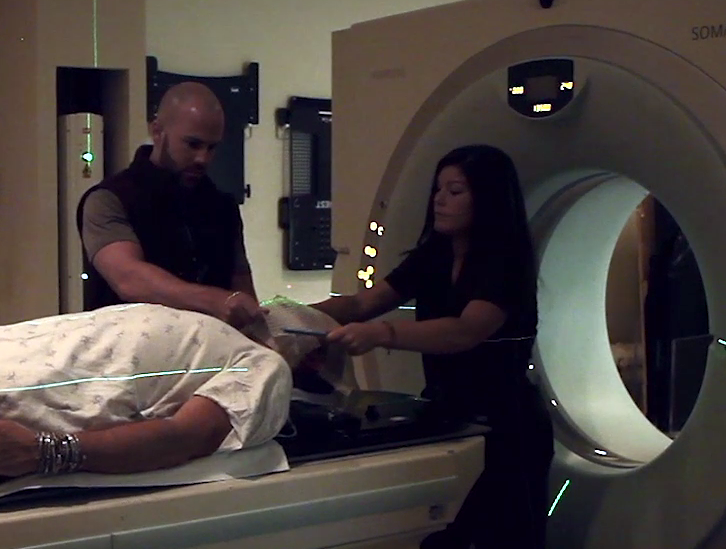 As an incoming patient unfamiliar with radiation therapy and the patient journey, Tom had had a lot of questions:
Where do I go? How do I prepare? What is the process like? Will I have support staff with me the whole time? Why do I need a mask? Does having a mask made before treatment hurt?
Tom's tumor required a custom immobilization device -- also known as a mask -- which is used to help patients remain still and in the same position each time they receive treatment.
What else do you want to know about a first visit to Penn Radiation Oncology?