Category: News

Office of Diversity Recognizes National Minority Cancer Awareness Week

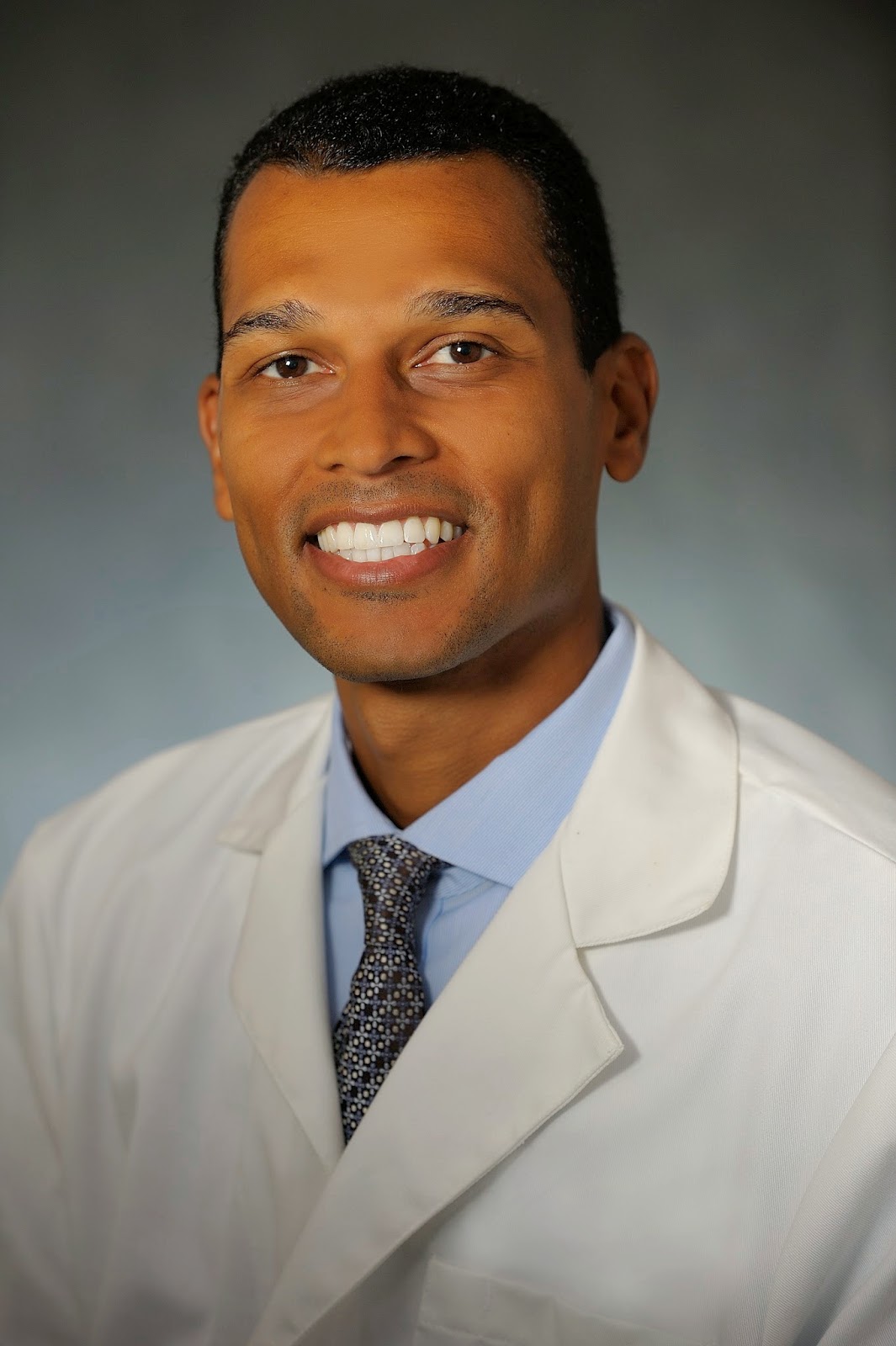
Curtiland Deville, MD, is an Assistant Professor and Chief of the Genitourinary and Sarcoma Services in the Department of Radiation Oncology. He has a research interest in assessing and improving diversity in the cancer physician workforce as a means to addressing health disparities. In this article, he discusses National Minority Cancer Awareness Week.

On April 8, 1987, the U.S. House of Representatives' Joint Resolution 119 designated the full third week in April as National Minority Cancer Awareness Week. As explained in the Congressional Record, Resolution 119 drew attention to "an unfortunate, but extremely important fact about cancer. While cancer affects men and women of every age, race, ethnic background and economic class, the disease has a disproportionately severe impact on minorities and the economically disadvantaged."

Why Diversity and Disparities Matter

Each year in the United States more than 1.6 million* people are diagnosed with cancer. Of those, racial and ethnic minorities are disproportionately affected. Although complex social, economic, and cultural factors may play a role, ultimately when considering and controlling for all of the above, racial and ethnic differences in outcomes still exist across the majority of cancers.

Source: American Cancer Society:*

  • Although white women are more likely to be diagnosed with breast cancer, black women are more likely to die from breast cancer.
  • Blacks are less likely to be screened for colorectal cancer and more likely to die from it.
  • Hispanic women are less likely to be screened for and more likely to be diagnosed with and die from cervical cancer.
  • Blacks are less likely to be diagnosed with lung cancer, but more likely to die from it, if diagnosed.
  • Black men are more likely to be diagnosed with prostate cancer and twice as likely to die from it compared to white men.

The Abramson Cancer Center's Office of Diversity
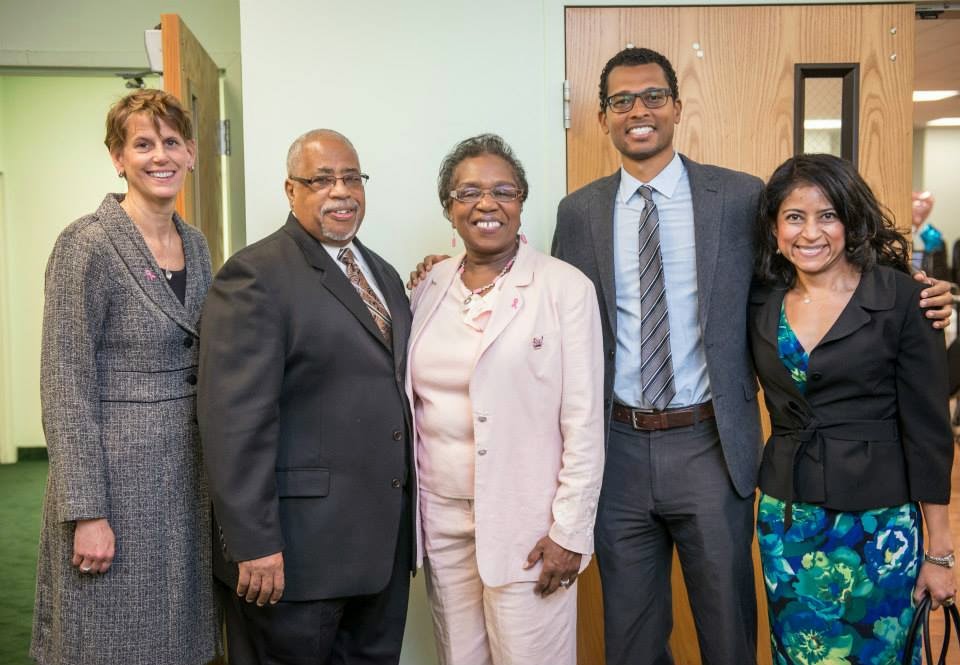
The Abramson Cancer Center joined CityLights Network and American Cancer Society at the Ezekiel Baptist Church in southwest Philadelphia for a free community education program about prostate and breast cancer. Left: Carey Davis, director of CityLights Network, Tom Henry, Brenda Bryant, senior research / outreach coordinator for the ACC Office of Diversity, Curtiland Deville, Jr., MD radiation oncologist and Carmen Guerra, MD, Penn physician.
The Abramson Cancer Center Office of Diversity was established in 2013 by the Abramson Cancer Center director, Dr. Chi Van Dang. The Abramson Cancer Center Office of Diversity supports the Abramson Cancer Center’s mission, vision and values by promoting diversity and inclusion as an integral part of the Center’s goals to understand, prevent, treat and cure cancer.

The Abramson Cancer Center's Office of Diversity supports initiatives like the Minority Cancer Health Awareness Week seeking to raise the awareness of cancer health disparities.

Be sure to subscribe to our blog to learn more about cancer disparities research happening at Penn.

For more resources and information:

Live Online Video Mesothelioma Cancer Chat with Penn Medicine Experts 5/1

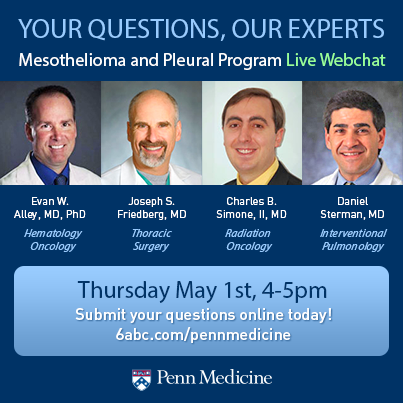
Join Penn Medicine’s Abramson Cancer Center and 6ABC for a special one-hour live web chat featuring physicians from the Penn Mesothelioma and Pleural Program this Thursday May 1st from 4-5 pm at 6abc.com/pennmedicine.

Mesothelioma - Did you know?

Mesothelioma is a rare, incurable disease, with approximately 2,000–3,000 new cases diagnosed a year in the United States. Exposure to asbestos accounts for up to 80% of all cases. Mesothelioma is more common in men mostly due to occupational exposure to asbestos.

Veterans, miners, factory workers, and those working in the manufacturing or construction business are at a greater risk of developing mesothelioma due to asbestos exposure.

Mesothelioma Can Be Treated

A popular misconception is that mesothelioma is a disease that can't be treated. Due to the complexity of this incurable disease, a true multidisciplinary approach is needed to ensure the best care available.

The Penn Mesothelioma and Pleural Program team has expertise in all types of treatment, including Lung-Sparing Surgery and Photodynamic Therapy, Immunotherapy, Proton Therapy, Radiation Therapy and Chemotherapy.

It is hard to find a group with the subspecialized experience as the team at Penn Medicine.Patients benefit from Penn Medicine’s ongoing research and our passion to eradicate this disease while providing the highest possible quality of life for each patient and their families as well.

Our Experts Answering Your Questions

Want to know more about:
  • Mesothelioma symptoms?
  • Is Screening available?
  • Penn Medicine's multidisciplinary approach?
  • Cutting edge treatment options?
  • New breakthrough clinical trials?
  • How to improve quality of life after diagnosis?
The Penn Medicine Mesothelioma and Pleural Program brings together internationally renowned experts. Representing the full spectrum of the Penn Mesothelioma and Pleural Program are director Joseph S. Friedberg, MD, Chief of the Division of Thoracic Surgery and co-director  Daniel Sterman, MD, Director of Interventional Pulmonary Services, Evan W. Alley, MD, PhD Interim Chief of the Division of Hematology and Medical Oncology Hematology-Oncology and Charles B. Simone, MD an Assistant Professor of Radiation Oncology at the Hospital of the University of Pennsylvania.

These Penn Medicine experts will be answering user-submitted questions in a live online chat next Thursday May 1st, from 4 - 5pm.


Celebrate Women’s Health

Are you a woman with a busy schedule?

As chief caretaker, taxi driver, scheduler and employee, it can be difficult to carve out time for yourself. This month is Women's Health Month, and the Abramson Cancer Center wants to remind you to schedule some time to keep yourself healthy.

Schedule a Mammogram

The mammogram is still the most important screening test in detecting breast cancer, and is thought to save thousands of lives a year. Beginning at 40, women should have mammograms annually – depending on the woman’s heredity and risks, her physician may suggest starting annual screenings even earlier than 40.

Know Your Risk for Ovarian Cancer

With 1 in 57 women in the United States developing ovarian cancer in their lifetime, it is the deadliest cancer in women and the 5th leading cause of cancer-related deaths in women.

The risk of developing ovarian and other certain types of cancer is greatly increased for women and men with a BRCA1 or BRCA2 mutation. Through expert genetic counseling, education, and long term care at the Mariann and Robert MacDonald Cancer Risk Evaluation Center, men and women can learn if they have a mutation putting them at greater risk.

For women and men with a BRCA gene mutation, the Basser Research Center for BRCA can help them learn more about their risk, and ways in which they can prevent cancer.

Consider the HPV Vaccine for Your Daughters (and Sons)

Genital human papillomavirus, commonly known as HPV, is the most common sexually transmitted virus in the United States, and can cause cervical cancer – the second leading cause of cancer deaths among women around the world.

Both forms of the HPV vaccine, Gardasil and Cervarix, are approved for girls and boys between the ages of 9 to 26, and is given in a three-dose series over the course of eight months. The vaccine does not cure a current HPV infection, therefore it should be administered before the girl or boy is sexually active.

Screen for Cancer

The best defense against cancer is often times detecting the disease in its earliest stages, before symptoms are present. Some of the cancer screening tests we recommend are:

Cervical cancer screenings no later than 21-years-old, or three years after becoming sexually active.
  • Pap tests should be done:
    • Every 1-2 years for women under 30
    • Every 2-3 years for women ages 30-70, if they have three normal test results in a row
    • Women over 70 who have had three or more normal Pap tests in a row and no abnormal results in the last 10 years may choose to stop having Pap tests.
  • Clinical breast exams every three years for women in their 20s and 30s
    • Yearly mammograms for women beginning at age 40
    • At age 50, follow a testing schedule for polyps and cancer
How do you stay healthy? Are you up to date on your screenings and exams? 

Find a Penn Primary Care Physician who can help you stay on top of your health here.

Dating After the Death of a Spouse

Jessica Bemis Young Widow
Jessica Bemis is a full-time, working mom of two who lost her husband to testicular cancer in November 2011. Since then, Jessica has been sharing her story on her blog, Hope for Young Widows and working to bring awareness and hope to women and men who have lost their spouses to cancer.

Dating after the death of a spouse can be an awkward experience. It can bring out feelings of guilt or betrayal in the widow or widower. It can also bring out feelings of confusion and concern from friends, family and those who were close to the deceased spouse.

I started dating again about a year after my husband died. It had been 11 years since I had been with anyone other than my husband. I took the year after his death to learn how to deal with being thrown into the full-time roles of parent, homemaker, animal caregiver, appointment scheduler, and child activity manager, as well as the sole financial provider.

It was exhausting, and dating was not at the top of my mind. When I knew I was ready to start to date again, I had frank discussions with my children about going on without their dad. I assured them that while there is a part of me that will always love their dad, it would be unrealistic to think I would live my life alone and sad. I have shown them that life is for living and we will continue to do just that.

There is no specific time period one should wait before dating again. The right amount of time to grieve is different for everyone, and at some point, a person just needs to be allowed to be happy again. Some people take years, others take weeks, and then there are those who choose never to date again. If a person was terminally ill, and the illness took a long time to run its course, the widowed person may have done a lot of grieving prior to the actual death and might be ready to date earlier than the “experts” predict. My husband was told he would be lucky to live two years post diagnosis. He survived 18 months after diagnosis. From the moment we got the news about my husband’s survival expectancy, I went into functioning like a single parent and we worked on getting things in order. But I also know that everyone is different.

Ready to Date Again

When I felt ready to at least test the dating waters, my girlfriends and I created an online dating profile for myself. I really didn’t want to go this route, but it seemed like the right thing to do to meet people in my age bracket. I went on two dates before I realized this was not the avenue for me to try and find a loving relationship. I decided I would just have fun with my girlfriends, children and enjoy my time to myself.

For me, learning to date became more about doing the things I enjoy and the hope of meeting someone while doing those things…for example, going to sporting events, running 5k’s, seeing movies, touring museums, and taking cooking classes. I learned that by doing the things I enjoy I might meet someone special. And, one evening at a Phillies game, I was very lucky to meet a wonderful man, who has become very special to me.

Once you to start dating someone special, it is important to defend your date when your friends and family learn you are dating again, there is the possibility they may not treat this new person in your life very well. The mistreatment may come in the form of a cold shoulder at family activities or constantly talking about the deceased person in front of the date. If you have family and friends who are doing this, they need to be told privately, but in a loving manner, that this behavior is not acceptable. If you wouldn’t let your family and friends treat your spouse that way, why would you tolerate that behavior toward someone else-especially when your date could become your future spouse? Your date needs and deserves to feel special. Treat your date in such a way that he or she feels like they are with someone who’s ready to move on. No one should have to compete with a spouse who has passed away.

I believe dating gives you the opportunity to open your heart to another person and the chance to experience the unique and exquisite joy that comes with falling in love again. It’s okay to talk about your deceased spouse, but set boundaries. Answer questions he or she may have about your marriage, but don’t spend all your time talking about your deceased spouse, or how happy you were with him. After all, your date is the one who’s here now. And, he or she might make you incredibly happy for years to come. Showing genuine interest in your date and getting to know his or her wants, interests and dreams go a long way towards starting a new life with someone else.

Part of the reason we are here is to live and enjoy life. And dating is a great way to start living again.